First Person Boxing Guards, Slips and Counters
Learn how to separate head and body defense, read a slip, and respond to a counter opening without committing to a long exchange.
Read the attack target, choose the appropriate guard or a deliberate slip, and answer only when you have useful range and enough control to reset. Current footage shows SLIPPED! and COUNTER NOW! cues, but no universal timing or guaranteed combo is established.
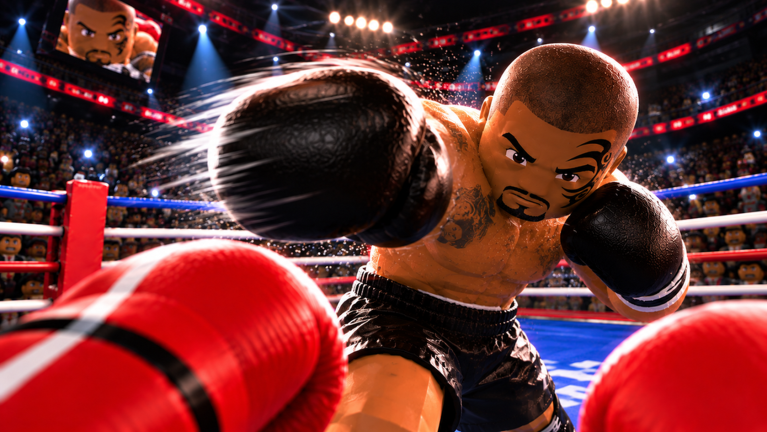
View reference image
On this page
The official First Person Boxing listing puts slips, counters, and separate head and body guards at the centre of combat. Those are three related decisions: where the incoming attack is going, how you will defend it, and whether you have a safe opportunity to answer. Treating all three as one reflex usually makes it harder to identify a mistake.
This guide offers a practice sequence rather than a guaranteed combo. ItzVexo’s 17 October footage supplies concrete examples of the Controls panel, named styles and SLIPPED!/COUNTER NOW! feedback. We reviewed the recording on 18 October 2026. Timing values, exact damage multipliers, and a ranking of every style are not established by that evidence.
Recognize the target before choosing a guard
A guard decision begins with the incoming attack. The developer explicitly distinguishes protecting your head from protecting your body. Watch the opponent’s approach and attack direction; do not choose a defensive action merely because it was the last one that worked.
In a practice exchange, reduce the number of things you attempt. Let the opponent begin an attack and try to identify its target. Use the defense shown in your current Controls panel. After the exchange, ask whether you protected the intended area before you ask whether your counter was good.
This distinction is useful when you feel as though you were “blocking the whole time.” That description leaves out which area you protected and when the defense began. A repeated hit can come from reading the wrong target, responding too late, or staying in an exchange you no longer understand. Each needs a different correction.
Do not assume that a visually high pair of gloves explains all of a style’s defensive behaviour. The recording shows Long Guard and Peekaboo style screens, but a pose alone does not document a complete protection rule. Use the current game’s descriptions and feedback alongside the appearance.
Keep style choice stable while learning
Changing style after every difficult bout can hide the skill you are actually trying to learn. For a short practice block, keep one available style and the same basic approach. You can then ask whether a different defensive decision improved the exchange without wondering whether the entire setup changed.
The visible Long Guard and Peekaboo names in the footage are useful recognition points if you are trying to find the matching screen. They are not a promise about unlock costs, drop chances, current availability or a best-style ranking. A creator’s recommendation describes that creator’s judgment at a particular time.
If you later compare styles, decide what you are comparing before you switch. A reasonable question is whether you can read the incoming attack more clearly or complete your intended reset more consistently. Avoid calling a style “better” because you won one bout with it after several losses.
For a new player, the beginner route provides a simpler first session. Return here after you can approach, make a short attack and see the response. Defense is much harder to study if you are still losing sight of the opponent every time you move.
Practice the slip as a separate action
The developer specifically names slipping punches. In the reviewed recording, a later exchange displays SLIPPED! near the action. That is a useful example of feedback to recognize, but it does not tell us a universal number of frames in which a slip will succeed.
Begin with an attack you can see coming. Attempt the appropriate head movement using your current device’s control prompts, then stop adding inputs long enough to see the result. Did the punch miss? Did the game show any feedback? Did you remain in a position from which you could see the next action?
A slip attempt that moves you out of one attack does not justify ignoring the next one. Practice returning to a readable position. If you immediately throw a long sequence, you may turn a successful defensive moment into an exchange you cannot follow.
When the attempt fails, avoid changing every part of it. Try the same situation with a slightly earlier read, or approach from a clearer position. Do not turn this into a precise timing claim: the recording has not supplied controlled tests that would support one. The goal is to recognize the attack and your own input clearly enough to improve the next attempt.
Use the counter cue to make a decision
The reviewed footage shows COUNTER NOW! during exchanges after defensive action. Link that visible cue to the developer’s statement that counters are part of the game. It is evidence that the interface can call attention to a counter opportunity; it is not evidence that a hit is guaranteed from every position.
When you see a possible opening, ask two quick questions: can you reach, and can you still afford the action? A punch from outside useful range can miss even when the idea was correct. An exhausted continuation can also leave you unable to respond to the next attack. The stamina guide explains how to use the resource display as part of this decision.
Start with one deliberate answer, then read the result. If you connected, return to defense instead of assuming you now own the rest of the exchange. If you missed, regain your view and position before trying to force another counter.
If you never see a cue, do not assume that the interface is broken. Confirm the current Controls panel and compare your action with the recorded example. We have not established every condition that triggers the message, so a missing cue does not identify the cause by itself.
Separate a guard problem from a counter problem
Review the exchange in order. First, did you recognize the incoming target? Second, did the intended defensive action happen? Third, did you choose an answer that could reach? Fourth, did you stop before the exchange became uncontrolled?
For example, suppose you avoided the first punch but your response missed. Repeating the defensive input faster may not solve that problem; range and the choice to answer deserve attention. If the first punch hit you, studying a longer counter sequence skips the part that failed.
Another common situation is an apparently successful guard followed by immediate exhaustion. Do a shorter version of the exchange and watch the stamina display. This is a suggestion for isolating the problem, not a claim that every defensive input has the same resource cost.
A useful practice note is a sentence such as “I read the head attack but continued swinging after the reply.” It names the failed decision and gives the next attempt a purpose. “I need a stronger style” is much less useful without evidence about what the style would change.
Transfer the drill to human opponents
AI practice makes repetition easier; another player can vary rhythm, range and target. Keep the same small defensive goal when you enter a player bout. Watch how the opponent responds to your first few decisions rather than rushing to demonstrate everything you practiced.
If a rival repeats one approach, choose a response you can explain. If they change approach, return to observation. Committing to a memorized sequence after the situation has changed defeats the purpose of reading the opponent.
Measure progress through clearer exchanges: an identified target, a deliberate defense, a visible opening and a controlled answer. A knockout is the eventual match result, while those smaller decisions explain whether your practice is transferring. Stop the block when fatigue makes the feedback unreadable, then return with one specific correction for the next bout.
Step-by-step guide
- Identify the incoming target
Separate a head or body read from the decision to use a guard or attempt a slip.
- Check the defensive result
Read the visible outcome before committing to a response; a missed defense and a missed counter need different corrections.
- Answer and reset deliberately
Use a short response only when range and current resource state support it, then read the next reply.
Quick reference
Your next decision
A quick route through this guide; see the body for sources and exceptions.
| Step | What to do |
|---|---|
| Identify the incoming target | Separate a head or body read from the decision to use a guard or attempt a slip. |
| Check the defensive result | Read the visible outcome before committing to a response; a missed defense and a missed counter need different corrections. |
| Answer and reset deliberately | Use a short response only when range and current resource state support it, then read the next reply. |
Video evidence
Watch creator walkthroughs alongside this guide. Check the recording date before following requirements that may have changed.
First Person Boxing GUIDE! (How To COMBO, Best Styles, Tips & Tricks) ROBLOX
Dated creator footage supports the first-person interface and combat feedback. Creator rankings and purchase suggestions are not treated as developer rules.
FAQ
Which version does this guide describe?
The official listing and dated creator footage were checked on 18 October 2026. No public build number was available. Follow your current in-game prompts when an update changes the interface.
Are the recommendations based on a personal playtest?
The facts come from the linked developer description and named creator footage. The route and practice suggestions are original editorial advice; no personal live playtest or paid purchase is claimed.
Sources
Recheck these links whenever the game version, release status, or strategy changes.
- First Person Boxing — official Roblox listing Developer description and exact game identity checked 18 October 2026.
- ItzVexo — First Person Boxing Guide! (Codes, Best Styles, Tips & Tricks, Controls) ROBLOX Published 2026-10-17. Creator footage, distinct from developer documentation.
- CHALLS — First Person Boxing GUIDE! (How To COMBO, Best Styles, Tips & Tricks) ROBLOX Published 2026-10-17. Creator footage, distinct from developer documentation.